| JUDGES RESOURCES |
Please note: The moderator will run the event. Judges simply have to assess the match using
the marking key.
Click here for the judges training video (This was produced for the North
Carolina Ethics Bowl in the US. We are using the same marking key)
Click here for the ethical Cases. These are the cases that students will be
dealing with.
Ethics Olympiad Marking key (Scoresheet) - Click here. ( These will
need to be printed out for the judges to use on the day)
Click here for the Judging Criteria-(This criteria would also be helpful to have
printed out as well)
Guidelines for Judges Click here.
the marking key.
Click here for the judges training video (This was produced for the North
Carolina Ethics Bowl in the US. We are using the same marking key)
Click here for the ethical Cases. These are the cases that students will be
dealing with.
Ethics Olympiad Marking key (Scoresheet) - Click here. ( These will
need to be printed out for the judges to use on the day)
Click here for the Judging Criteria-(This criteria would also be helpful to have
printed out as well)
Guidelines for Judges Click here.
| 2020 Senior School School Online Ethics Olympiad |
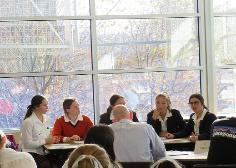
Judges
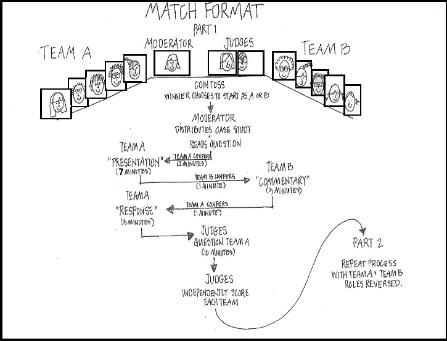
- Judges should direct their questions to teams based on the discussion, not to individuals.
- Teams must answer the moderator’s case question during their presentation period. Teams are
judged and scored on how well its members clearly and systematically address and respond to the
question asked. - Teams will not be penalized or rewarded by the judges depending on whether one person speaks
or everyone contributes. Judges should neither penalize nor reward a team for using either
approach: both are welcome. - When one team confers or speaks, the other team and any audience members must remain silent
although writing and passing notes is permitted. (For example, when Team A is given the case
and question, they are allowed to confer for two minutes and then present for five minutes. During
those five minutes, Team B is permitted to write notes,but must remain silent. - Anyone in the room who intentionally makes distracting noises while one of the teams, judges, or
moderator has the floor will be asked to step out of the room. Foul, insulting, or excessively
graphic language or confrontational behavior by anyone in the room will not be permitted. - Please note, the moderator can only control the noise within the room. If there are outside
distractions, such as construction or students talking, it is up to the moderator, not the coach or
parent, to decide if the round should be paused. - The decisions of the judges is final and heats will be totalled on the day. Where there is a tie the
Head judge will select the winner from the following process. The highest scores in the first heat....
if that is still a draw the highest score in the second heat and so on. - If there is a complaint or challenge to the results this should be put in writing to the organisers.
- The teams that come first and second over the days heats will participate in the final. If for some
reason one of those teams cannot participate then they will forfeit their place and be relegated to
third place. And first and third will play off for the Gold medal. - Both teams participating in the final cannot be from the same school. In the case there are two
teams form the same school ranked highest then 1st and 3rd will play off for the Gold and Silver
medal. - The results will be emailed to supervising teachers following the event as well as certificates
which will need to be presented to the students at a school assembly.

 |
| |
 |
| |
 |
| |
 |
Judging Panel
Arlo Sporn B.A. Philosophy, University of British Columbia, M.A.
Philosophy, University of Toronto, J.D. candidate, Harvard Law
School. Areas of study: meta ethics, applied ethics, philosophy of
science.
Catherine Geraghty-Slavica- President of SOPHY CANBERRA
(SOCIETY OF PHILOSOPHY FOR THE YOUNG) Dip Teach, B
Ed. BA (Hons) Phil, (COGE) UNSW, Teach Ed Cert (Phil).
Dr Chantelle Saville- Phd. Graduate from the University of
Auckland- The Will to Believe: Freedom of Thought in Late
Medieval Philosophy and Literature'
Chenyuan Li- Mr. Li served as NSDA (National Speech and
Debate Association) judge and debate coach.
Dan Yang- MEd (Master of Education), University of Sydney
Lecturer, Donghua University, Shanghai
Director of Training Center of College of Foreign Languages
Gabriel Freund B.A. Hons., MA. Philosophy (in progress)
University of British Columbia. Areas of Study: Ethics,
Social/Political Philosophy, Philosophy of Mind.
Guy Varndell- Year 10 Learning Coordinator, Gifted and
Talented Coordinator IB Diploma Global Politics | ATAR Politics &
Law
Dr Jennifer Duke-Yonge- Lecturer in the Philosophy Dept at
Macquarie University Sydney.
Dr Matt Deaton- Philosophy Professor and Author- The
University of Texas at Tyler, Tyler, Texas (remotely from TN)
Michael Anderson- MAT Lewis & Clark College, MALS Reed
College, is a former high school IB Philosophy and Theory of
Knowledge teacher, currently an Ethics Bowl Coach and
Philosophy Club Adviser at the Vancouver School of Arts &
Academics in Vancouver, Washington, USA.
Moor Chen- B.A., Philosophy, Scripps College Ms. Chen served
as NSDA (National Speech and Debate Association) judge and
BP (British Parliamentary Style) Debate judge. She was also a BP
debater in college.
Dr Nin Kirkham - Chair of Philosophy, Vice President
(Academic) NTEU, Deputy Head of School (Community and
Engagement) The University of Western Australia
Stefan Popov- B.A., Philosophy, Williams College Mr. Popov
currently works as an education consultant with an emphasis on
developing student's writing and critical thinking skills.
Arlo Sporn B.A. Philosophy, University of British Columbia, M.A.
Philosophy, University of Toronto, J.D. candidate, Harvard Law
School. Areas of study: meta ethics, applied ethics, philosophy of
science.
Catherine Geraghty-Slavica- President of SOPHY CANBERRA
(SOCIETY OF PHILOSOPHY FOR THE YOUNG) Dip Teach, B
Ed. BA (Hons) Phil, (COGE) UNSW, Teach Ed Cert (Phil).
Dr Chantelle Saville- Phd. Graduate from the University of
Auckland- The Will to Believe: Freedom of Thought in Late
Medieval Philosophy and Literature'
Chenyuan Li- Mr. Li served as NSDA (National Speech and
Debate Association) judge and debate coach.
Dan Yang- MEd (Master of Education), University of Sydney
Lecturer, Donghua University, Shanghai
Director of Training Center of College of Foreign Languages
Gabriel Freund B.A. Hons., MA. Philosophy (in progress)
University of British Columbia. Areas of Study: Ethics,
Social/Political Philosophy, Philosophy of Mind.
Guy Varndell- Year 10 Learning Coordinator, Gifted and
Talented Coordinator IB Diploma Global Politics | ATAR Politics &
Law
Dr Jennifer Duke-Yonge- Lecturer in the Philosophy Dept at
Macquarie University Sydney.
Dr Matt Deaton- Philosophy Professor and Author- The
University of Texas at Tyler, Tyler, Texas (remotely from TN)
Michael Anderson- MAT Lewis & Clark College, MALS Reed
College, is a former high school IB Philosophy and Theory of
Knowledge teacher, currently an Ethics Bowl Coach and
Philosophy Club Adviser at the Vancouver School of Arts &
Academics in Vancouver, Washington, USA.
Moor Chen- B.A., Philosophy, Scripps College Ms. Chen served
as NSDA (National Speech and Debate Association) judge and
BP (British Parliamentary Style) Debate judge. She was also a BP
debater in college.
Dr Nin Kirkham - Chair of Philosophy, Vice President
(Academic) NTEU, Deputy Head of School (Community and
Engagement) The University of Western Australia
Stefan Popov- B.A., Philosophy, Williams College Mr. Popov
currently works as an education consultant with an emphasis on
developing student's writing and critical thinking skills.